
Brand recognition grows when the same name, look and message show up wherever your customers look for you: Google search, your Google Business Profile, your website, your reviews and your signage. It is built by consistency and repetition, not by one big campaign. At The DM Link, we build SEO, web design, branding and reputation work as one plan, in-house, so every place a customer meets your business says the same thing.
TL;DR
- Recognition means people can identify your business from its cues (name, logo, colours, voice) before they read the details, and it comes from repeated, consistent exposure.
- Canadians say trust matters when they buy: 95% rate trusting the brand as important in NielsenIQ’s 2025 Consumer Outlook for Canada.
- For a local business, the fastest places to repeat yourself are search results, your Google Business Profile, reviews and your website.
- Pick one identity, write it down, and apply it everywhere before you spend on more reach.
- Measure against a goal (calls, bookings, review count), not against how busy your feeds look.
Table of Contents
- What brand recognition actually is
- Why it pays off for a local business
- Start with one identity, written down
- Make search results do the repeating for you
- Your website is the home of the brand
- Show up regularly, in a rhythm you can keep
- Use real-world touchpoints too
- How to tell whether it is working
- Our perspective
- See where your visibility leaks
- FAQ
- Sources
What brand recognition actually is
Brand recognition is the extent to which people can identify your business from its cues, such as a logo, a colour or packaging, without seeing the name. It works through consistent exposure and memorable experiences that build associations in the customer’s mind.
It is related to brand awareness but not identical. Shopify’s guide separates recognition, recalling the basic outline of a brand’s image, from awareness, the deeper understanding of what the brand stands for. For a plumber, a restaurant or a salon, the practical test is simple: when someone needs what you sell, does your name come to mind, and does it look familiar when they see it in a list of results?
Why it pays off for a local business
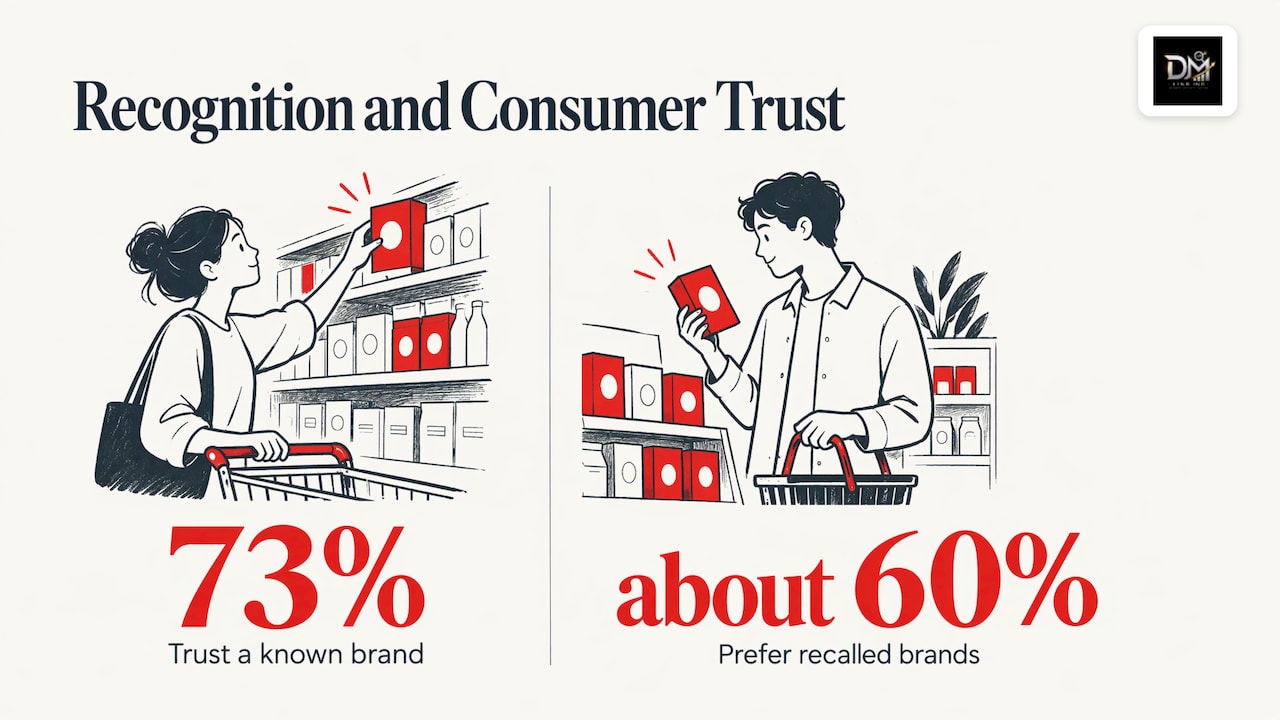
People buy from names they know. Shopify cites Ipsos research that 73% of consumers are more likely to trust a brand they know, and that about 60% of global consumers prefer to buy a new product from a brand they recall. NielsenIQ adds that recognition builds credibility, supports loyalty and makes the money you spend on marketing work harder.
The Government of British Columbia’s marketing guidance makes the cost point plainly: a strong brand supports customer loyalty, and keeping a customer is cheaper than winning a new one. It also notes that a brand that delivers on its promise can support higher pricing.
If you want the name to be yours alone, it also helps to protect it. The Canadian Intellectual Property Office explains that a registered trademark helps build reputation and goodwill, maintain customer loyalty and deter counterfeiters. For a legal question about your name, speak to a trademark lawyer or agent.
Start with one identity, written down
Most weak recognition is not a reach problem. It is a consistency problem: three logo versions, two business names, a different tone on Instagram than on the website. Customers cannot build a memory from signals that keep changing.
BDC says a brand is the customer’s experience, relationship and perception of you, and that consistency across positioning, customer service, website, signage and every marketing material is key. CIRA’s guide for businesses going online gives a workable starting point: describe your voice in three to five adjectives, choose your colours and fonts, have a distinctive logo, and keep that identity the same across your website, promotional materials and packaging.
A one-page brand sheet is enough:
- Name: the exact business name as it appears everywhere, including punctuation and abbreviations.
- Logo files: one primary version and one compact version for profile pictures.
- Colours and fonts: exact values, so a printer, a web designer and a sign maker all match.
- Voice: your three to five adjectives, with one sentence that shows each.
- One-line promise: what you do, for whom, and where.
- Languages: if you serve customers in English and French, decide how each version reads so neither feels like a translation.
This is the part of the job where working with a team that handles logo, website and content together matters. We design logos and brand identities and build the site in-house, so the sheet becomes the real thing on your site and profiles instead of a PDF nobody opens. Our logo, brand design and website services are built on one plan for exactly this reason.
Make search results do the repeating for you
For a local business, most first meetings with your brand happen on a results page. Statista’s consumer data for Canada shows that search engines, customer reviews and online stores were the most common ways Canadians looked up product information. Each time your business appears, looks the same and sounds the same, recognition builds.
Keep your name, address and phone identical
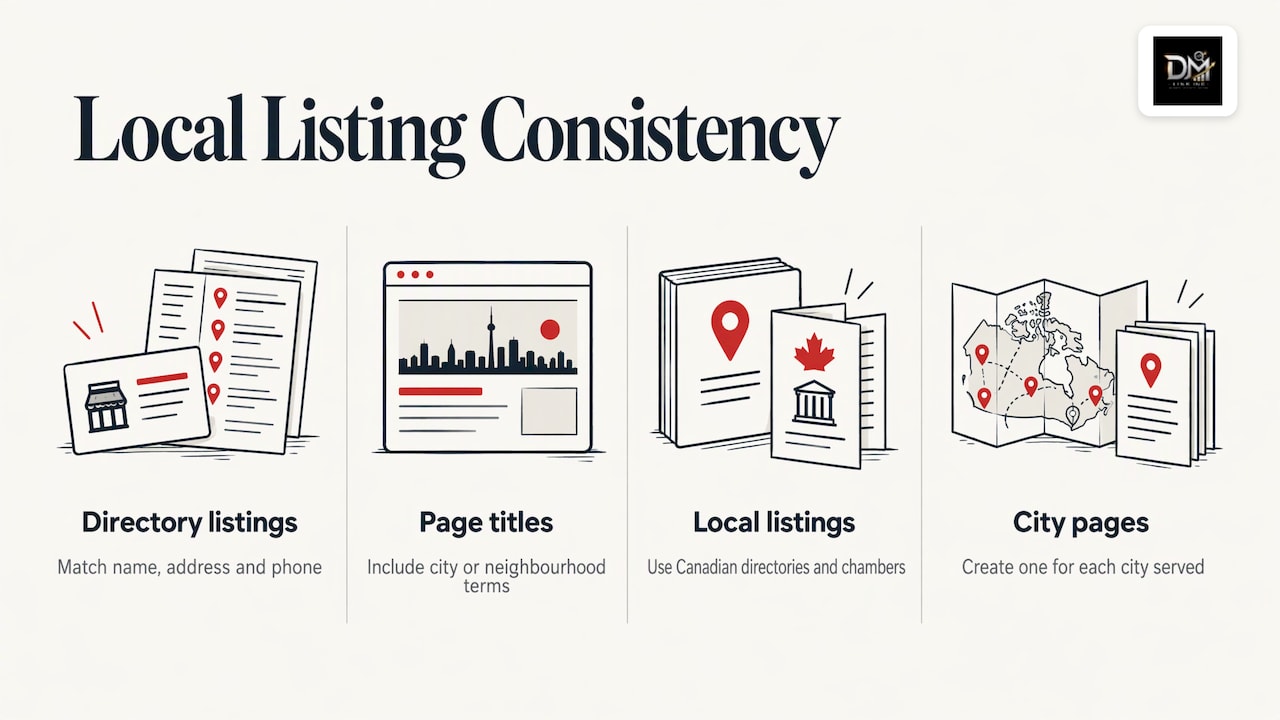
Xero Canada’s small business guide recommends keeping name, address and phone number identical across every directory listing, using city or neighbourhood terms in page titles, building listings on Canadian directories and local chambers of commerce, and creating a dedicated page for each city you serve. These are small details, but they are what make a business look like one stable entity instead of several near-duplicates.
If you want a fuller view of how this works, our guide on local SEO for home service businesses in Canada goes through the steps for trades, and Digital Marketing Strategies for Local Businesses in Canada covers the wider picture.
Treat reviews as brand cues
Reviews are the customer’s description of your brand in their own words, shown right next to your name. Xero Canada recommends asking happy customers for a Google review after each job. Make it routine: a text message with the review link the same day, sent by the person who did the work. Then answer every review in your brand’s voice, good or bad. Our pages on how reviews affect local SEO and Google Business Profile rankings and Google review management for Canadian businesses explain the mechanics, and brand reputation monitoring shows what to track.
Be findable where customers now ask questions
More people ask AI tools and answer engines for local recommendations. Those tools draw on the same signals: a consistent business name, clear service descriptions and reviews. Our AI and answer engine SEO work is aimed at getting your business described correctly there too.
Your website is the home of the brand
Every search result, review and social post points back to your site. If it looks different from your profiles, loads slowly or is out of date, the familiarity you built is wasted. CIBC’s small business tool kit advises keeping content updated and fresh, noting that search engines prioritize the most relevant and recent content and users prefer up-to-date material.
A recognition-ready homepage does four things in the first screen: it shows your name and logo exactly as they appear elsewhere, states what you do and where in one line, uses your brand colours and fonts, and gives one clear next step such as calling or booking. Our piece on why every Canadian small business needs a modern website covers the rest, and if your current site no longer matches your brand, the signs it is time for a redesign are worth checking.
Show up regularly, in a rhythm you can keep
Recognition needs repetition, and repetition needs a schedule you can sustain. Xero Canada suggests a content calendar of two or three posts per week, created in one weekly batch, with each piece repurposed across channels: a blog post becomes social tips, a short video and an email subject line. Its point is that consistency matters more than volume.
A simple weekly rhythm for a local business:
- Monday: one job, dish or project photo with a short caption in your brand voice.
- Wednesday: one useful tip from your trade, written once and reused as a post, a short video and a newsletter line.
- Friday: one customer review or result, with permission.
If you also run paid campaigns, plan them the same way. A practical social media advertising strategy starts from a consistent message, so the ads reinforce what your organic posts already say. For restaurants specifically, see restaurant marketing ideas that work in Canada.
Use real-world touchpoints too
Recognition is not only digital. Your van, uniform, signage, receipts, packaging and giveaways all repeat the same cues. When these match your website and profiles, a customer who sees your truck and later searches your name recognizes you at once. We handle custom merchandise design alongside logo and brand work, so printed items follow the same brand sheet as everything else.
How to tell whether it is working
Set a goal first, then pick the number that reflects it. BDC suggests tying measurement to your objectives: leads or sales for revenue goals, email sign-ups for lead goals, and the number of customer reviews for online reputation goals. It also recommends tracking traffic volume, time on site, sources and devices with free or low-cost analytics, and reviewing the data regularly.
For a local business, these signals show growing recognition:
| Signal | Where to see it | What an improvement looks like |
|---|---|---|
| Searches for your business name | Google Search Console, Google Business Profile | More people typing your name directly |
| Calls, direction requests, bookings | Google Business Profile, phone log | A steady rise month over month |
| Direct and returning website visits | Website analytics | More visitors who arrive without clicking an ad |
| New reviews per month | Google Business Profile | A consistent flow, not a burst |
| “How did you hear about us?” answers | Intake form or front desk | More answers naming your brand or a referral |
Review the table monthly, in the same format, and change one thing at a time. Brand recognition moves slowly, so look for direction over a quarter, not a week.
Our perspective
Most small businesses do not have a visibility problem so much as a scattered-signals problem. The logo came from one freelancer, the website from another, the reviews are unanswered and the social profiles say something else. Each piece is fine alone. Together they do not add up to a business people remember.
That is why we build the pieces as one plan. You talk directly to the team doing the work, everything is built in-house, and the plan is built on your market, your competitors and your seasons. We work in English and French and write like a local, because a brand in Quebec should not sound like a translation.
We also believe you should own what is built: your domain, hosting, site, content, accounts and data, from day one. Recognition is an asset you grow over years, and it should sit in your hands, not rented from a platform or an ad budget.
DM
See where your visibility leaks
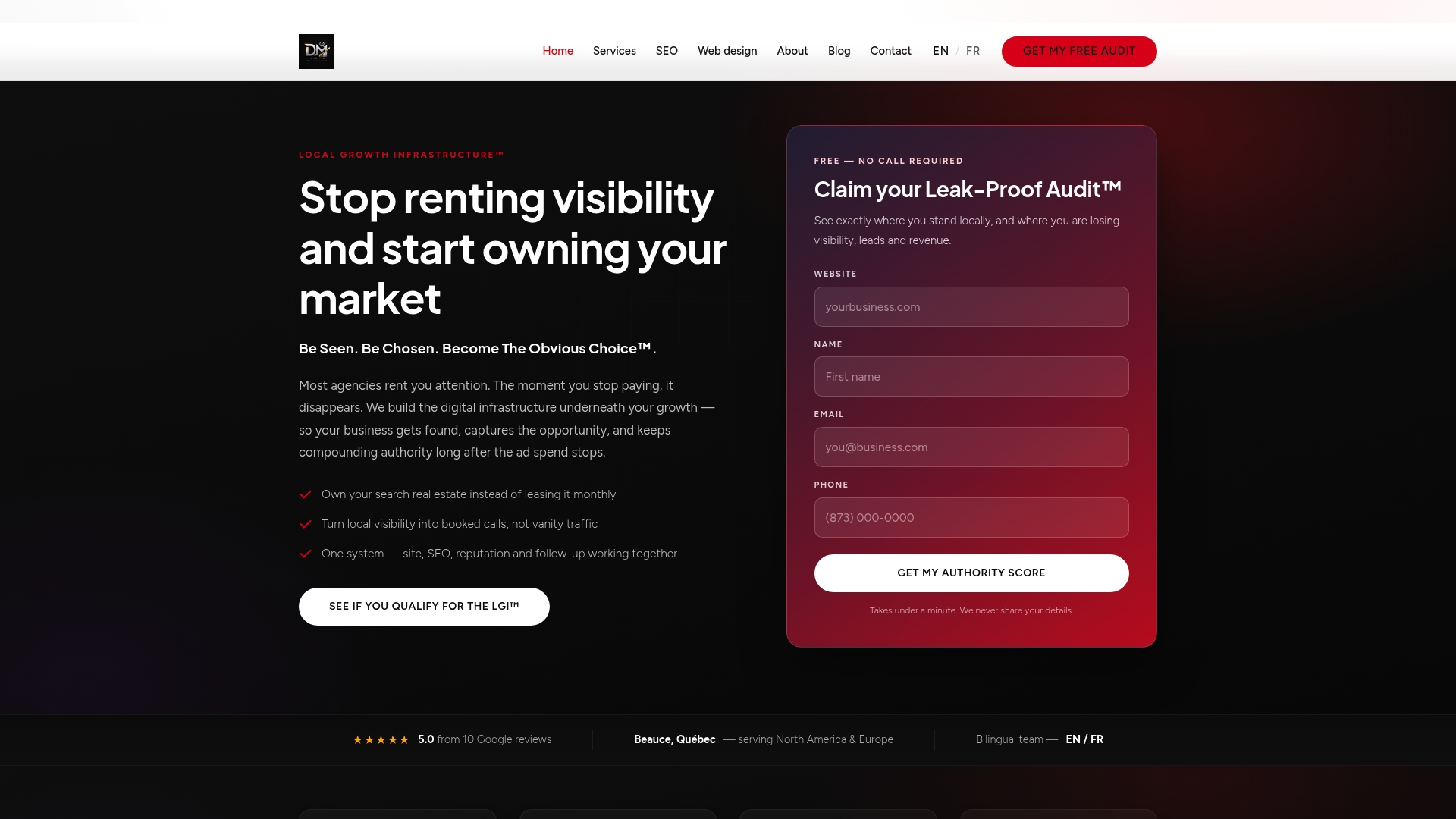
If you are not sure which of these areas is holding your recognition back, the free Leak-Proof Audit™ evaluates your local authority and points to where visibility and revenue are being lost. From there, we can build the plan across SEO, website, reputation and branding with one team. Start on our home page or see the full list of services.
We also publish a plain-language comparison of local SEO and Google Ads for Canadian small businesses if you are weighing where to put your budget first.
FAQ
What is the fastest way to improve brand recognition?
Fix consistency first. Use the same name, logo, colours and voice on your website, Google Business Profile, directories and signage. Then add a steady review routine, because these are the places local customers see you most often.
How long does it take to build brand recognition?
It depends on your market, your competition and how often people encounter your business, so no fixed timeline is honest. Because recognition builds through repeated exposure, expect to judge progress over months, using searches for your name, calls and review volume as your markers.
Is brand recognition the same as brand awareness?
Not quite. Recognition is being able to identify a brand from its cues, such as a logo or colour. Awareness is the broader understanding of what the brand is and stands for. Recognition is usually the first step toward it.
Do reviews really help brand recognition?
Yes. Reviews appear beside your name in search and maps, in your customers’ own words, so each one repeats your name and reinforces what people expect from you. A steady flow after every job, with replies in your brand voice, keeps that picture current.
Sources
- Brand recognition, NIQ
- Consumer Outlook Guide to 2026, Canada, NielsenIQ
- What is brand recognition?, Amazon Ads
- Brand Recognition: Meaning, Metrics, and Tips, Shopify
- Trademarks: why they matter, Canadian Intellectual Property Office
- Marketing Your Business: Essential Read for Entrepreneurs, BDC
- The definitive guide to bringing your business online, CIRA
- Digital marketing for small businesses: starter guide, Xero Canada
- Building your brand presence through digital, CIBC Business Banking
- Consumer behavior in Canada, Statista
- Social Media Advertising Strategy: A Practical Plan